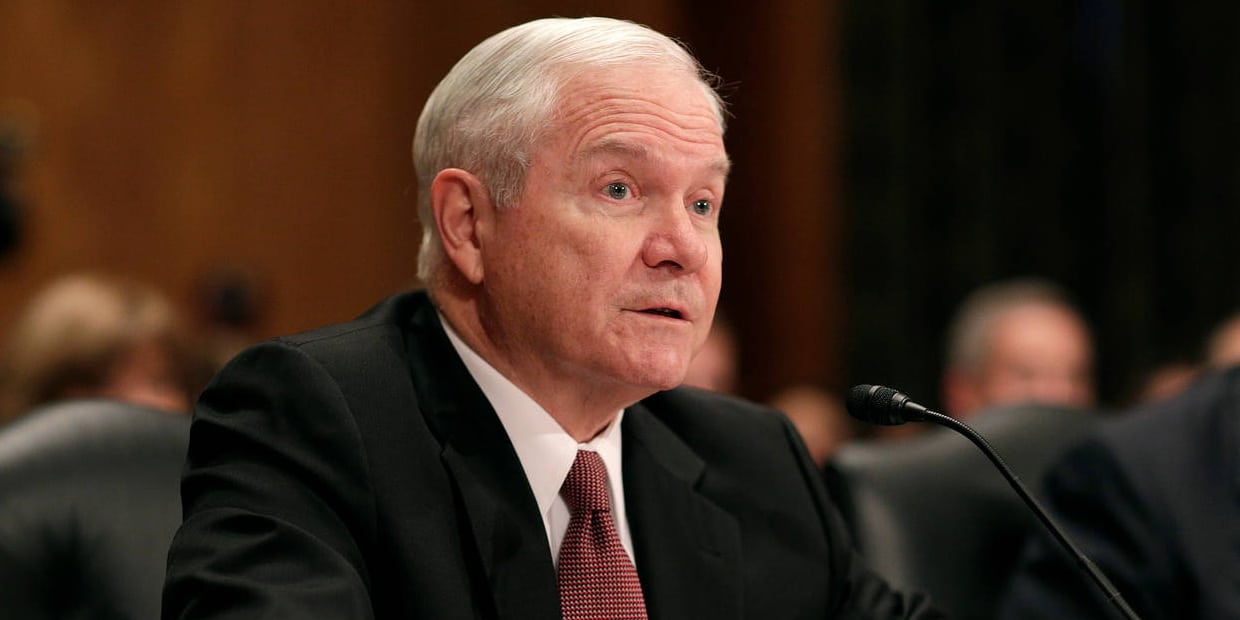
Robert Gates' $5 Million Net Worth: A Legacy Forged in Public Service and Academia
Robert M. Gates, a name synonymous with American national security and dedicated public service, has built a distinguished career spanning decades. As of recent estimates, his **robert gates net worth** stands at an impressive $5 million. This figure is not merely a number; it represents a lifetime commitment to high-stakes government roles, significant academic leadership, and influential advisory positions. Born Robert Michael Gates on September 25, 1943, in Wichita, Kansas, Gates' journey from a young scholar to the 22nd United States Secretary of Defense is a testament to intellect, resilience, and an unwavering dedication to the nation. Unlike many wealthy individuals who amass fortunes in the private sector, Gates’ wealth is a reflection of consistent, high-level earnings from pivotal roles in government and prestigious universities, supplemented by post-retirement activities such as speaking engagements, book deals, and board memberships. His story offers a unique perspective on wealth accumulation through public service, where influence and legacy often supersede pure financial gain.
From Humble Beginnings to Intelligence Ranks: The Early Years
Gates' foundation was laid in a solid academic environment. After graduating from Wichita High School East in 1961, he pursued a Bachelor of Arts degree in History from the College of William & Mary, graduating in 1965. His academic excellence was recognized with the Algernon Sydney Sullivan Award, foreshadowing a career marked by distinction. He continued his studies, earning a Master of Arts in History from Indiana University in 1966. It was during this period that his path took a significant turn. In the same year, Gates was recruited by the Central Intelligence Agency (CIA), marking the beginning of a profound career in intelligence.
His initial years at the CIA were formative. With sponsorship from the agency, he became a second lieutenant in the US Air Force, serving two years as an intelligence officer. Concurrently, he pursued and completed his Ph.D. in Russian and Soviet history at Georgetown University in 1974. This academic rigor, combined with practical intelligence experience, provided him with an unparalleled understanding of global affairs and security challenges. Gates quickly climbed the ranks within the CIA, demonstrating an astute ability to navigate complex geopolitical landscapes. He served in various capacities, including the National Security Council, before returning to the agency in 1979 to direct the Strategic Evaluation Center. His steady ascent culminated in his nomination to become the Director of Central Intelligence. Though his initial nomination faced controversy, he was successfully nominated again in 1991, serving as director for two pivotal years. His journey from a young recruit to the head of one of the nation’s most critical intelligence agencies is a compelling narrative of dedication and expertise. To explore more about his intelligence career and path to financial success, delve into
From CIA to $5 Million: Robert Gates' Path to Success.
Leading the Pentagon: Secretary of Defense and Bipartisan Service
After his tenure at the CIA, Gates transitioned to academia, lecturing at various high-profile universities and contributing insightful commentary on government and foreign policy for prestigious publications like
The New York Times. In 1999, he assumed the role of Interim Dean of the Bush School of Government and Public Service at Texas A&M University, eventually becoming the university's president. Under his leadership, Texas A&M flourished, seeing significant improvements and growth. His commitment to the university was so strong that he initially turned down an offer to become the first Director of National Intelligence (DNI), preferring to remain at Texas A&M.
However, the call to serve at an even higher level came knocking in 2006. On November 8, 2006, Robert Gates accepted the nomination for Secretary of Defense, stepping into the formidable shoes of Donald Rumsfeld. This appointment was historic for several reasons. Gates took the helm of the Department of Defense during a critical period, deeply embroiled in the Iraq War. His pragmatism and depth of experience were immediately put to the test. He oversaw pivotal shifts in strategy, including the "surge" of troops in Iraq in 2007, a controversial but ultimately effective move that helped stabilize the region.
What truly set Gates apart was his unique distinction of serving as Secretary of Defense for two different presidents from opposing political parties: first under President George W. Bush, and then seamlessly continuing his service into President Barack Obama's administration until his retirement in 2011. This bipartisan trust highlighted his reputation as a non-ideological, results-oriented leader. His tenure was marked by efforts to reform the Pentagon, modernize military capabilities, and navigate complex global challenges, from Afghanistan to budgetary constraints. His ability to work across the political divide earned him immense respect and demonstrated a rare capacity for consensus-building in a highly polarized environment.
Academia, Boards, and Enduring Influence
Even after leaving the Pentagon, Robert Gates continued to shape public discourse and leadership. His wealth is not solely derived from his government salaries, which, while substantial for high-ranking officials (a Secretary of Defense earns over $200,000 annually), are complemented by other income streams typical for prominent public figures. These include:
*
Book Royalties: Gates is a prolific author, having penned several best-selling memoirs and analyses, such as
Duty: Memoirs of a Secretary at War and
Exercise of Power: American Failures, Successes, and a New Path Forward in the Post-Cold War World. These books provide significant income and extend his intellectual legacy.
*
Speaking Engagements: As a sought-after speaker, Gates commands high fees for sharing his insights on national security, leadership, and foreign policy at corporate events, universities, and conferences worldwide.
*
Corporate and Advisory Board Memberships: Leveraging his vast experience and network, Gates has served on several corporate boards and advisory panels. These roles provide compensation for his strategic guidance and expertise.
*
Academic Positions: Beyond his presidency at Texas A&M, Gates has maintained strong ties to academia, serving as Chancellor of the College of William & Mary.
*
Leadership in Non-Profits: His commitment to service extends to organizations like the Boy Scouts of America, where he served as President, reflecting his lifelong dedication to character building and leadership development.
These diverse income streams collectively contribute to his robust **robert gates net worth** of $5 million, illustrating how a career in public service can lead to significant financial stability and continued influence. For more details on his varied career and accolades, see
Robert Gates' $5M Journey: Defense, Academia, and Awards.
Key Career Milestones & Accolades
Robert Gates' career is punctuated by significant achievements and recognitions:
- 1966-1974: Recruited by the CIA, served as intelligence officer, earned Ph.D. from Georgetown University.
- 1974-1979: Served with the National Security Council.
- 1979-1993: Returned to CIA, eventually served as Director of Central Intelligence (1991-1993).
- 1999-2006: President of Texas A&M University.
- 2006-2011: 22nd United States Secretary of Defense under Presidents George W. Bush and Barack Obama.
- 2011: Awarded the Presidential Medal of Freedom by President Obama, the nation's highest civilian honor, recognizing his extraordinary contributions.
- Post-2011: Continued influence through authorship, speaking engagements, and leadership roles such as Chancellor of the College of William & Mary and President of the Boy Scouts of America.
Each role not only added to his experience and prestige but also contributed incrementally to his financial standing, culminating in his current net worth.
Conclusion
Robert Gates' $5 million net worth is a testament to a life defined by extraordinary public service, intellectual rigor, and unwavering commitment to the nation's security. From his early days in the CIA to his pivotal role as Secretary of Defense under two administrations, and his impactful leadership in academia, Gates has consistently demonstrated a profound capacity for leadership and strategic thinking. His financial standing reflects a career built on merit, expertise, and a dedication that transcended political divides. Gates' legacy is not just one of financial success but of a public servant who navigated some of the most challenging periods in modern American history with integrity, pragmatism, and a deep sense of duty, leaving an indelible mark on national security, education, and the very fabric of American leadership.